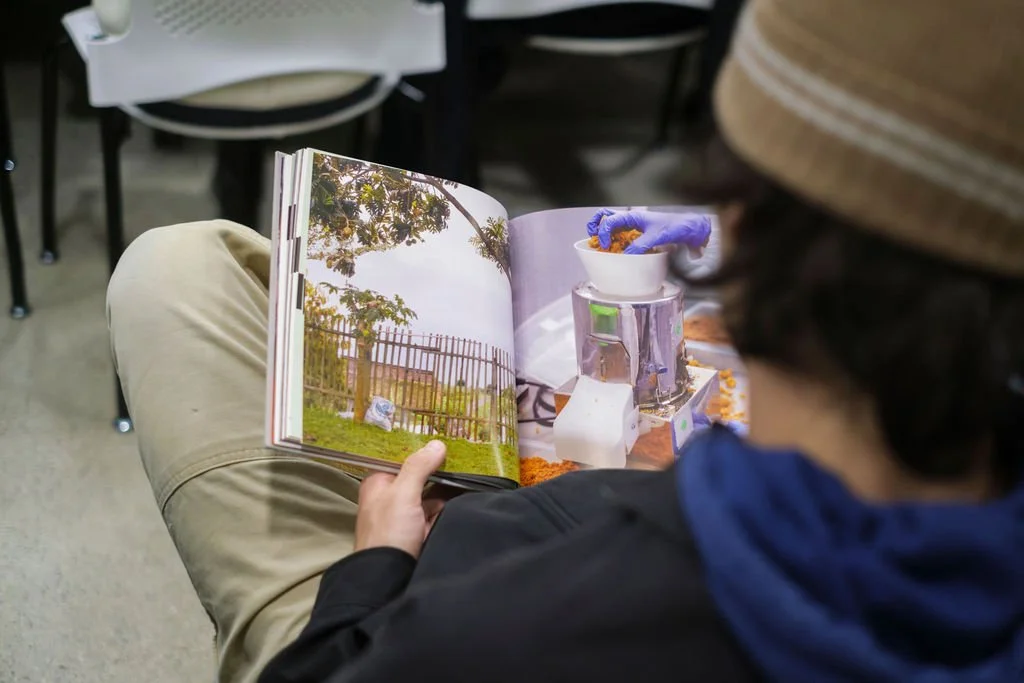
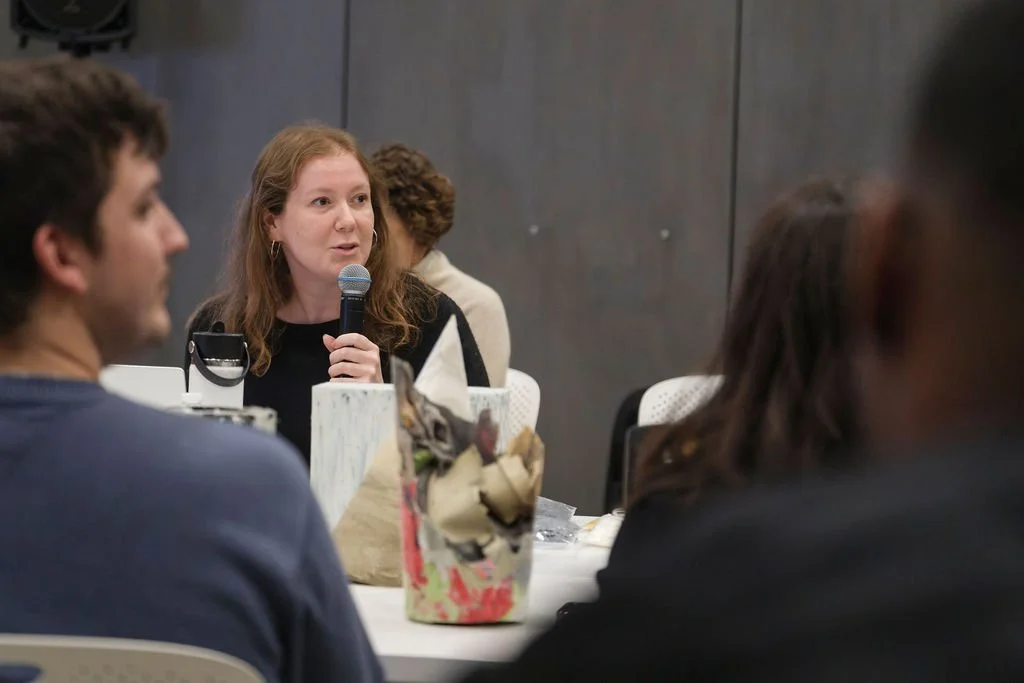
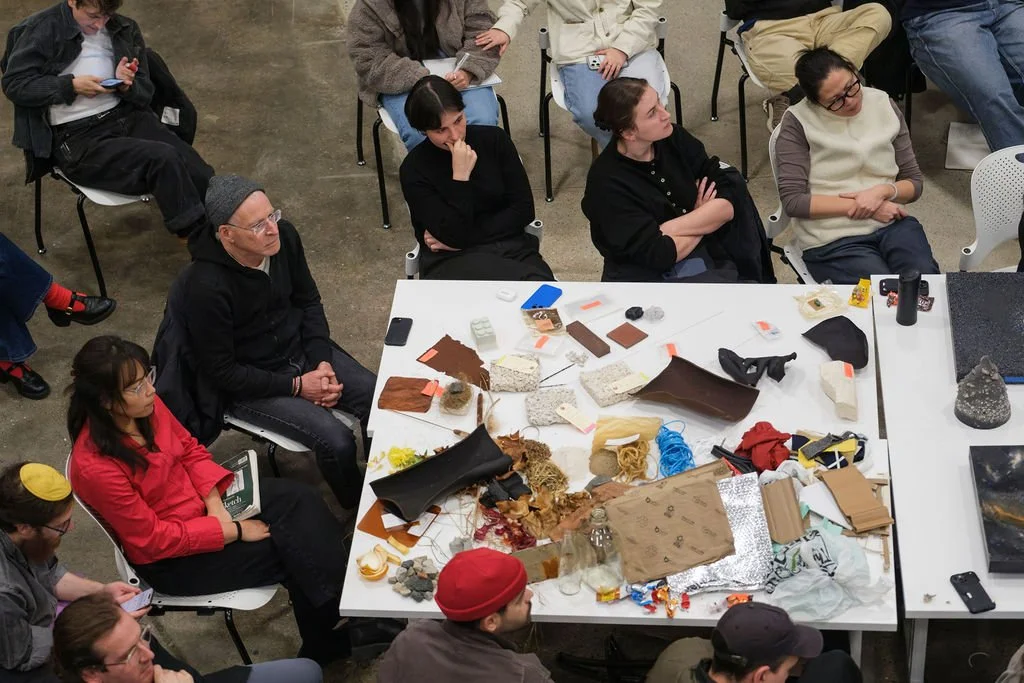
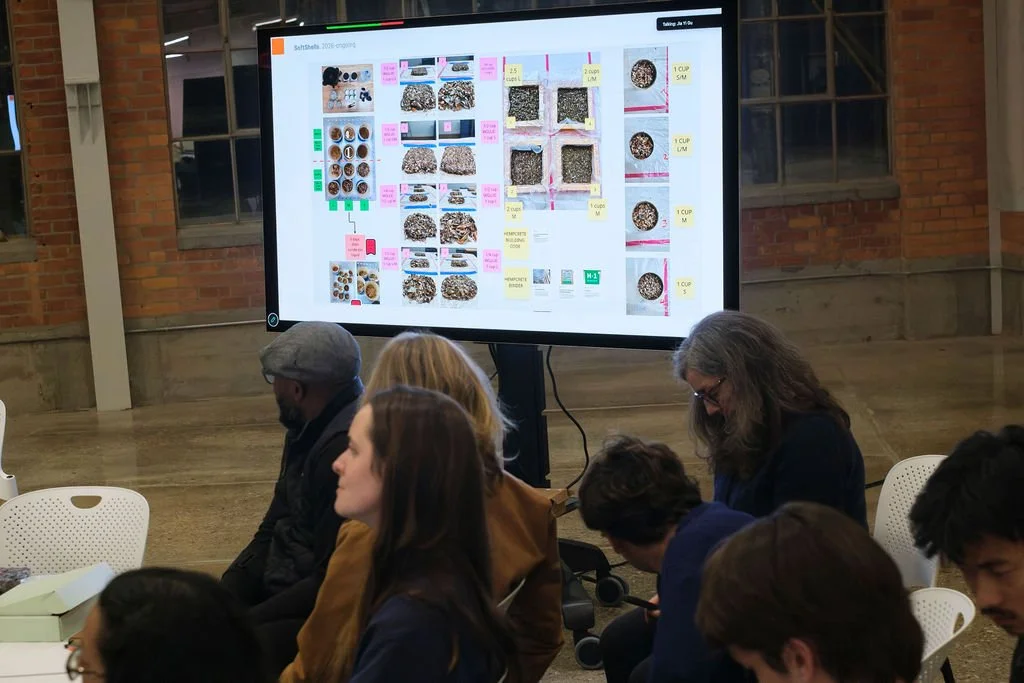
Photography by Charlotte Smith, 2026.
Material Feast #2
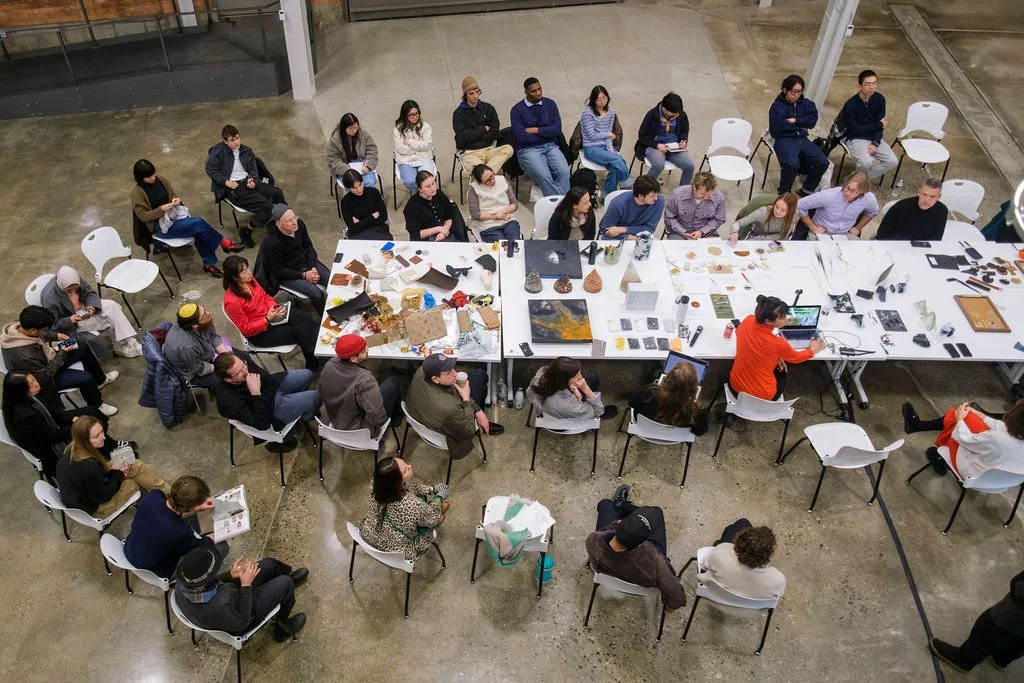
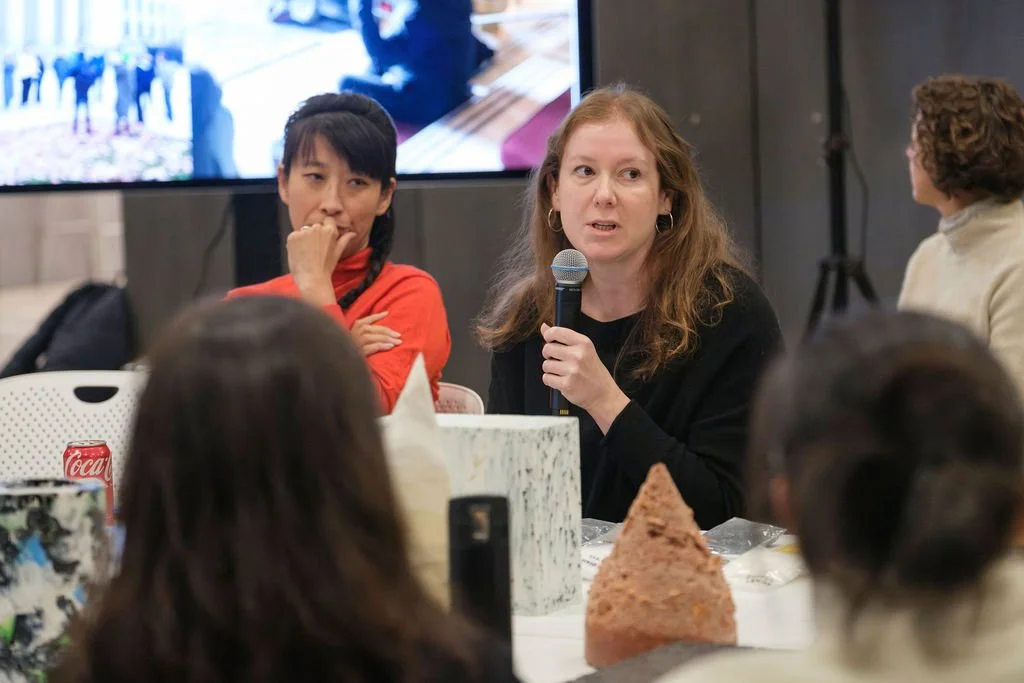
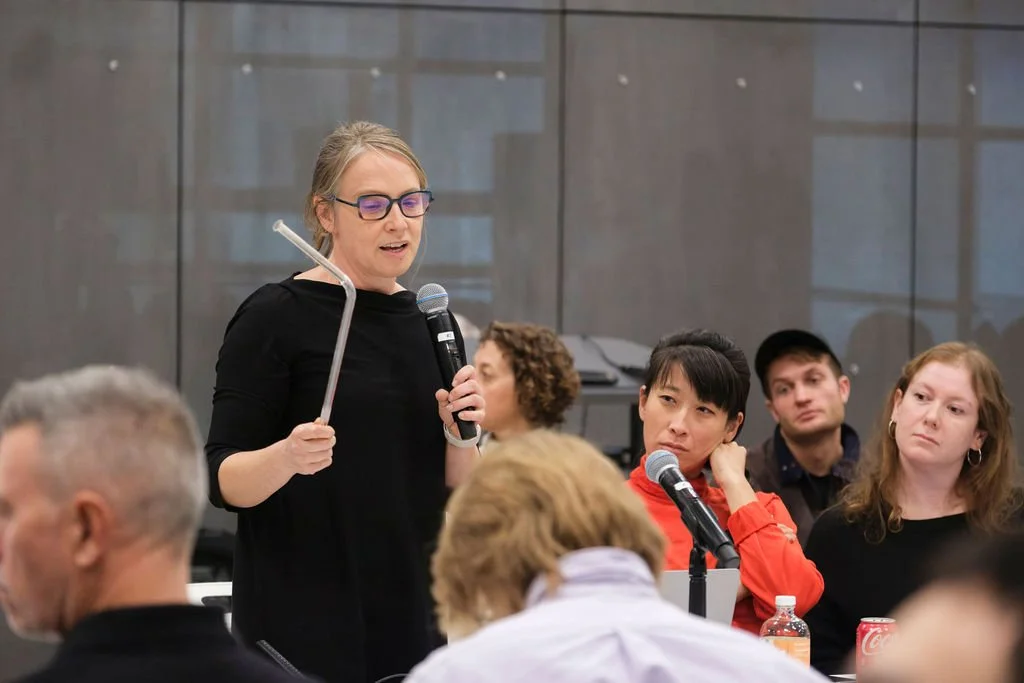
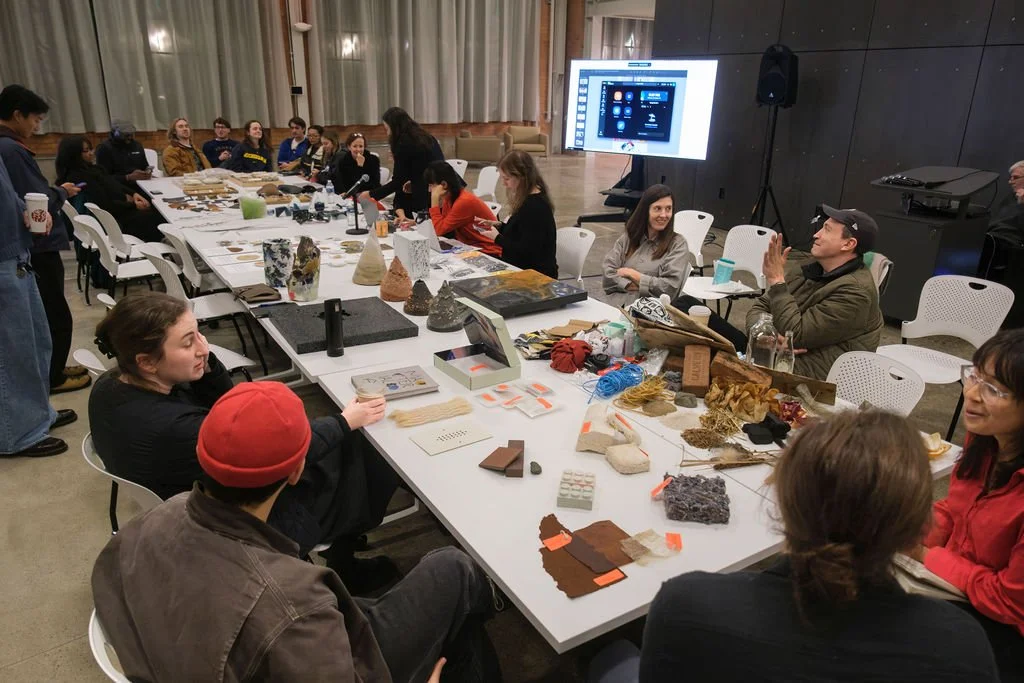
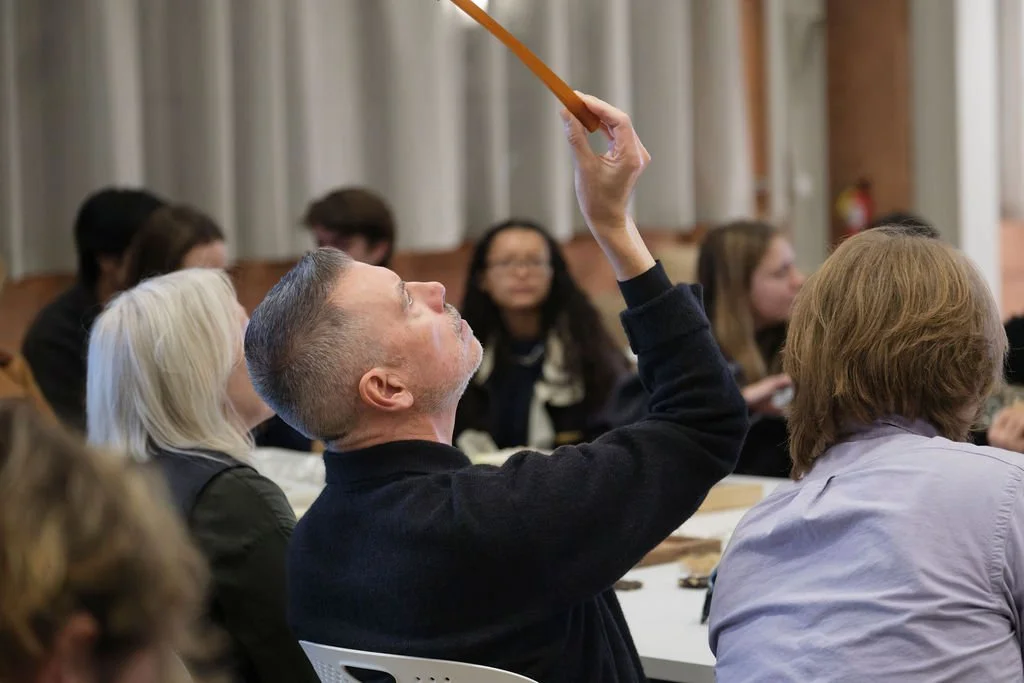
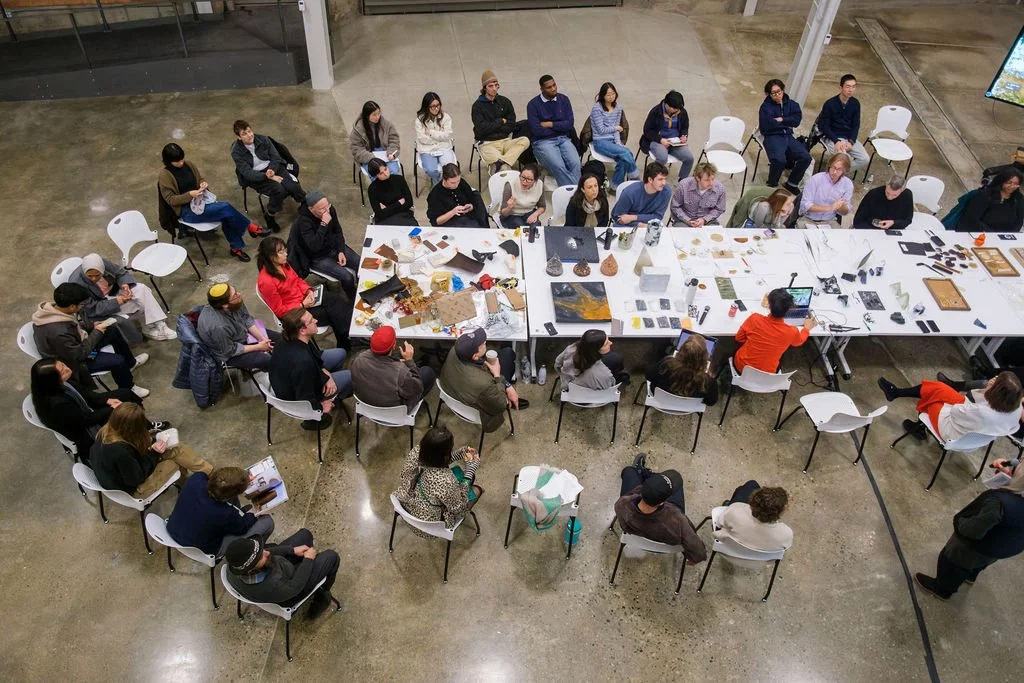
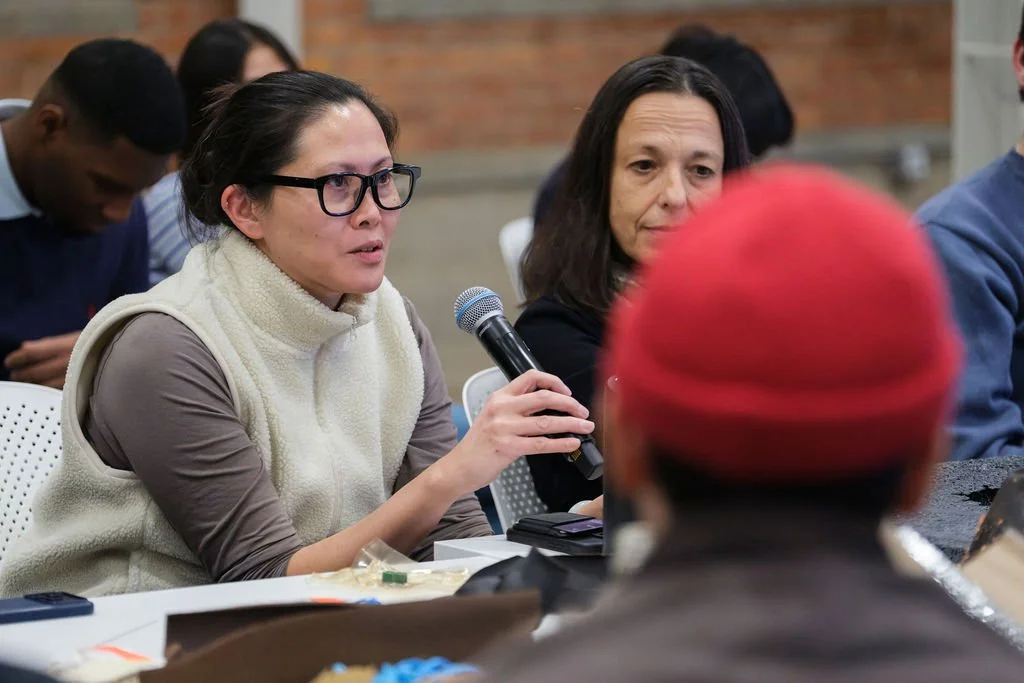
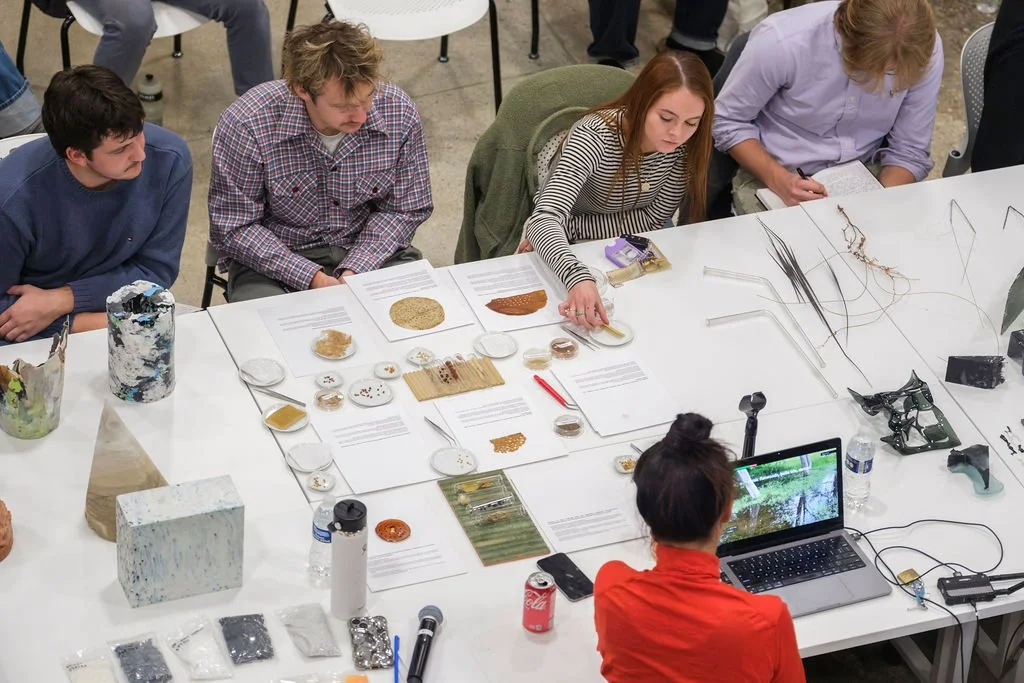
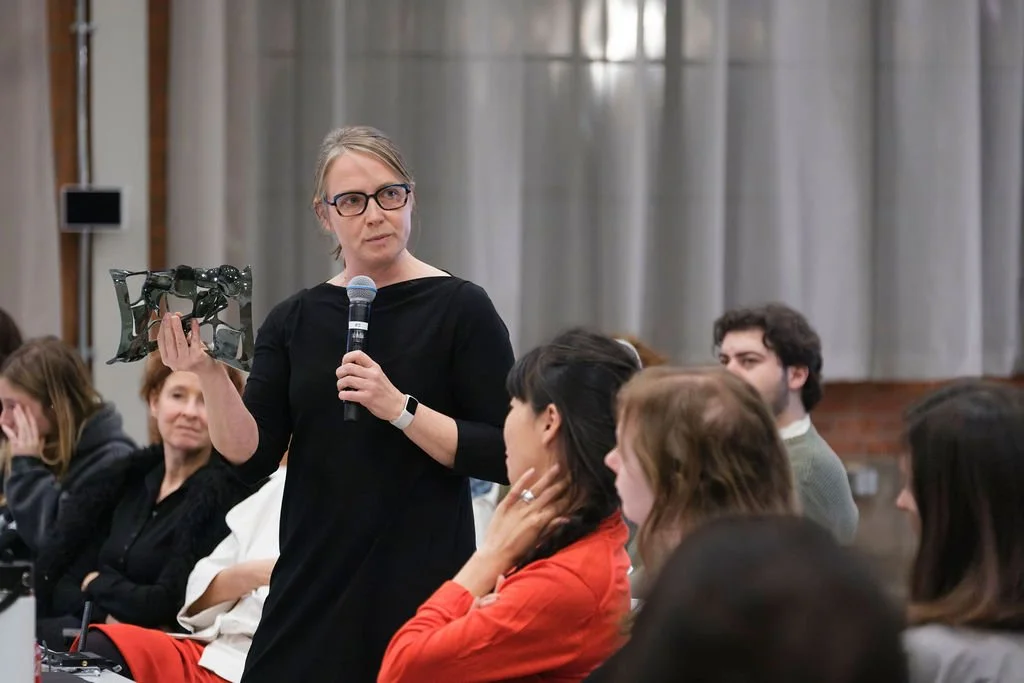
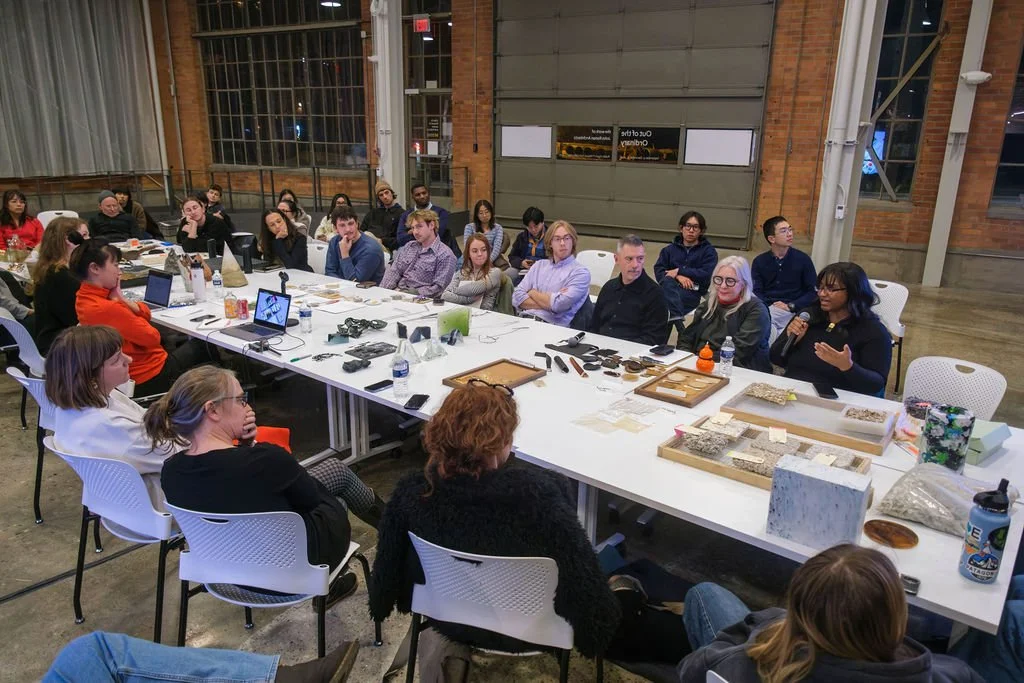
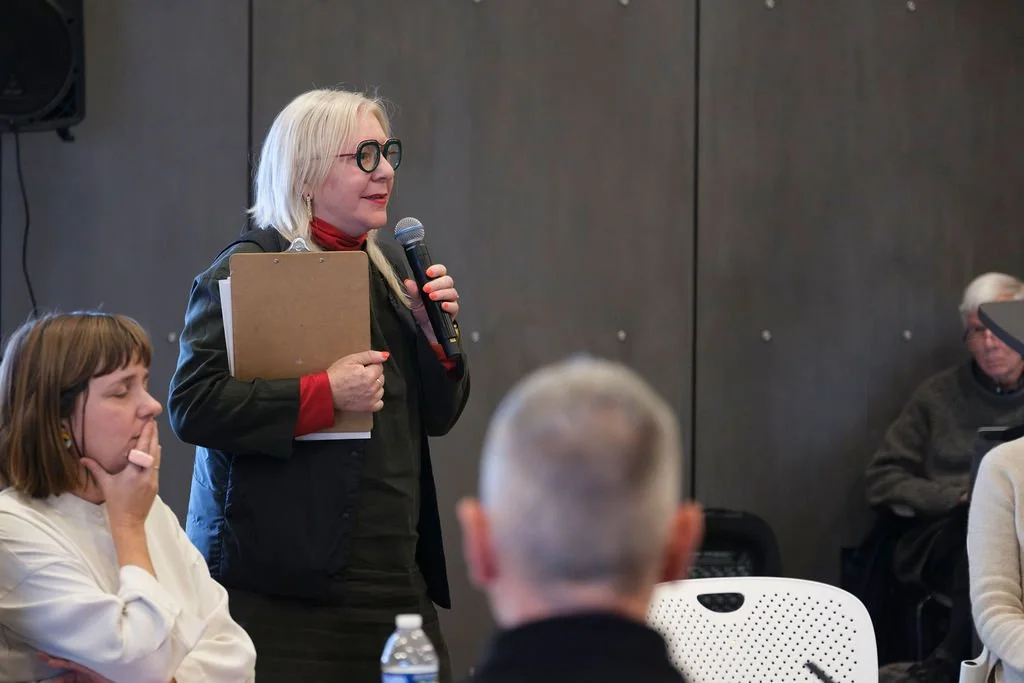
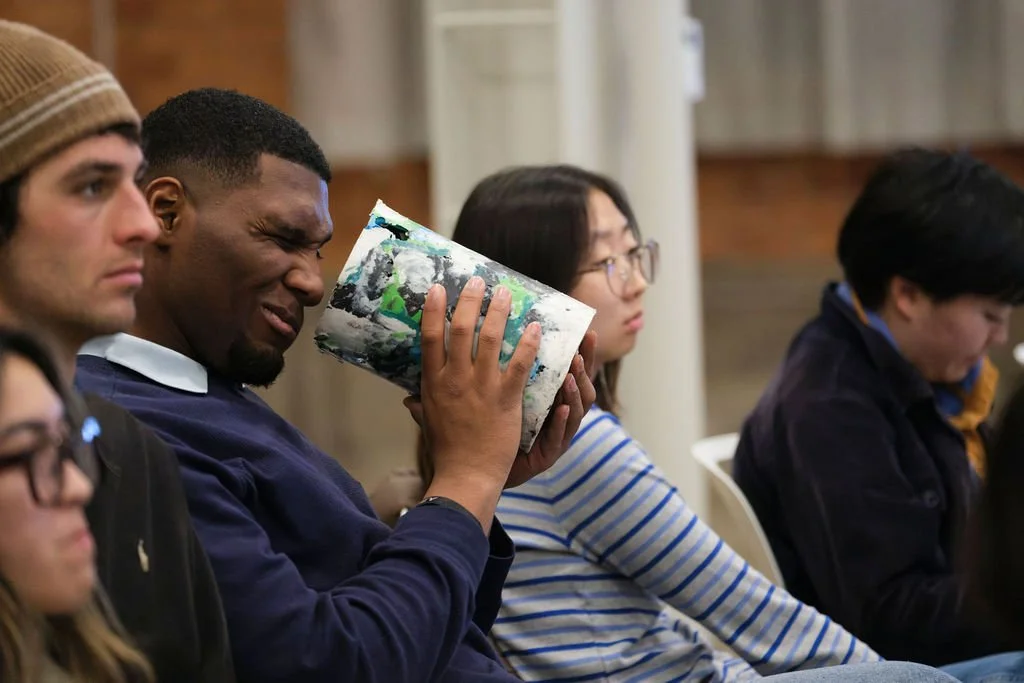
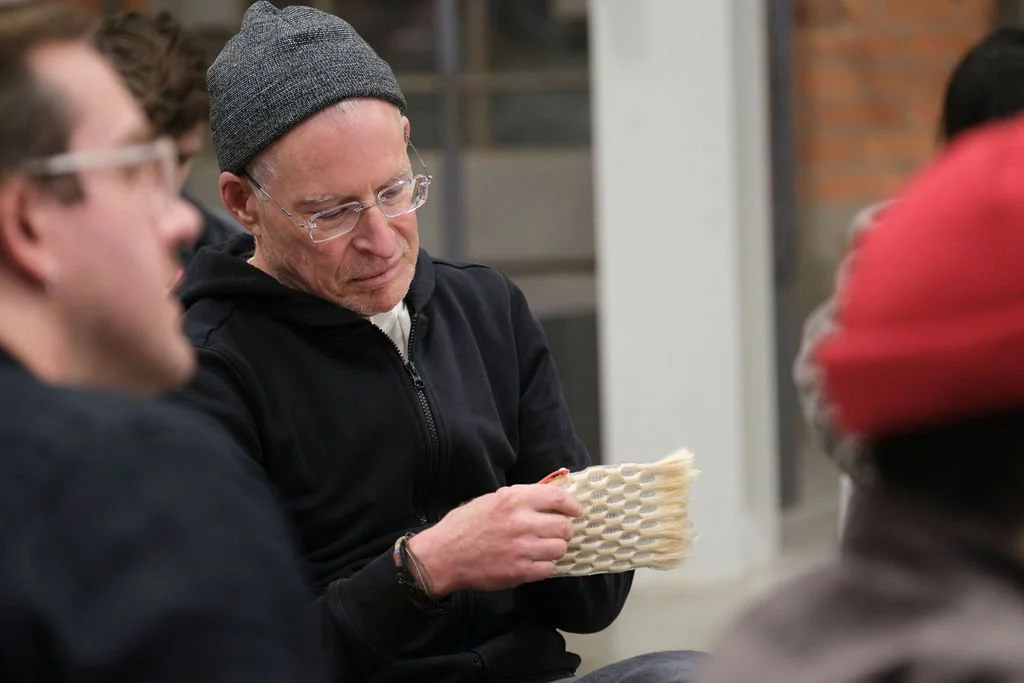
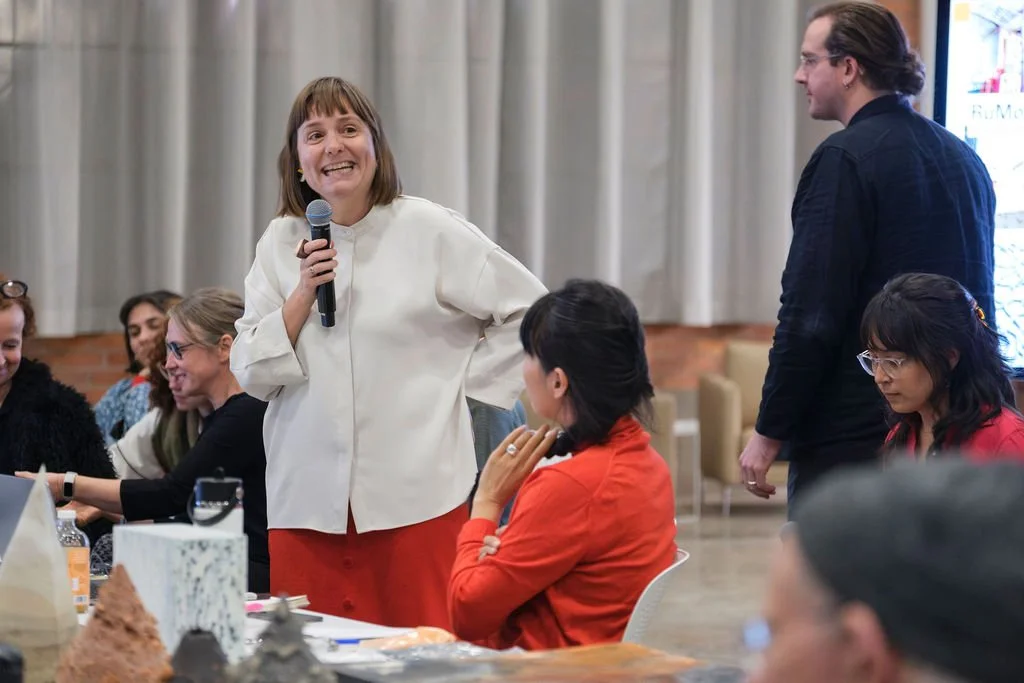
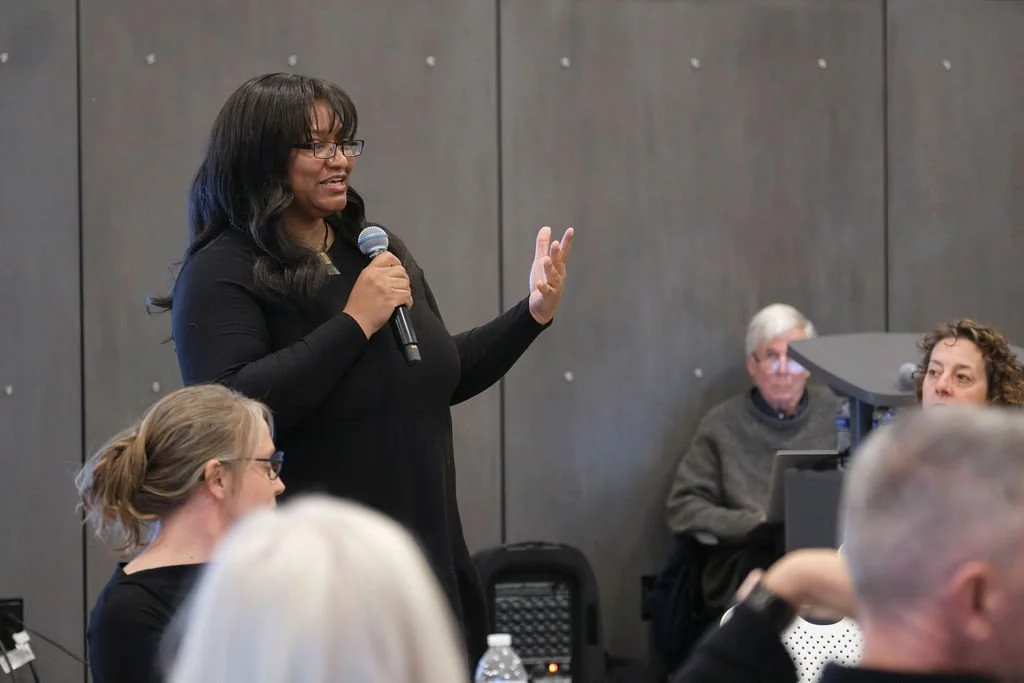
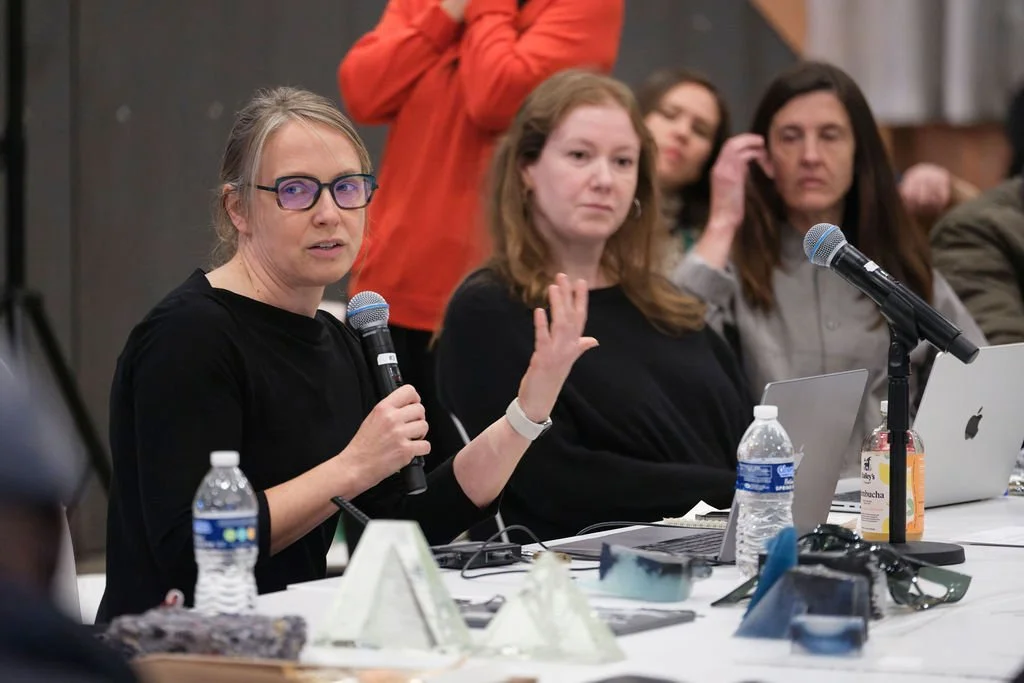
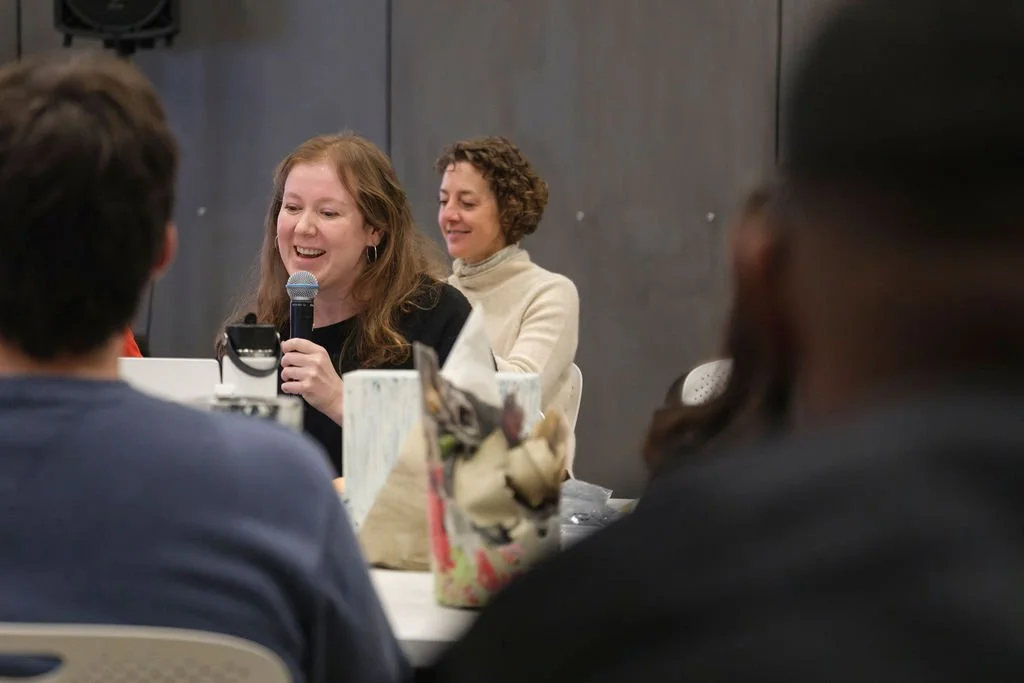
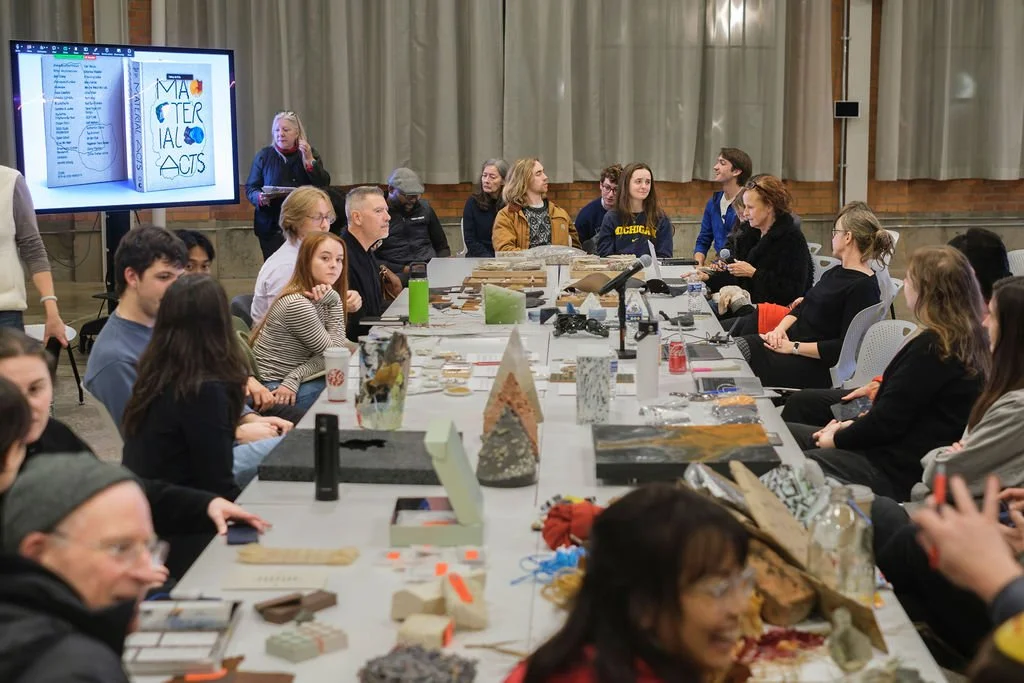
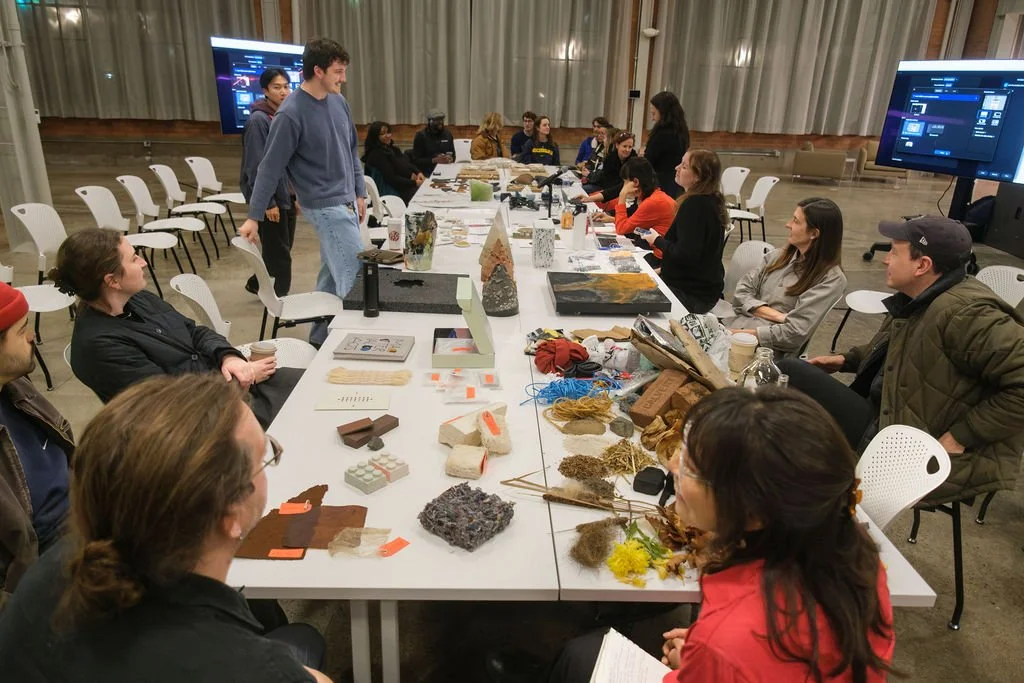
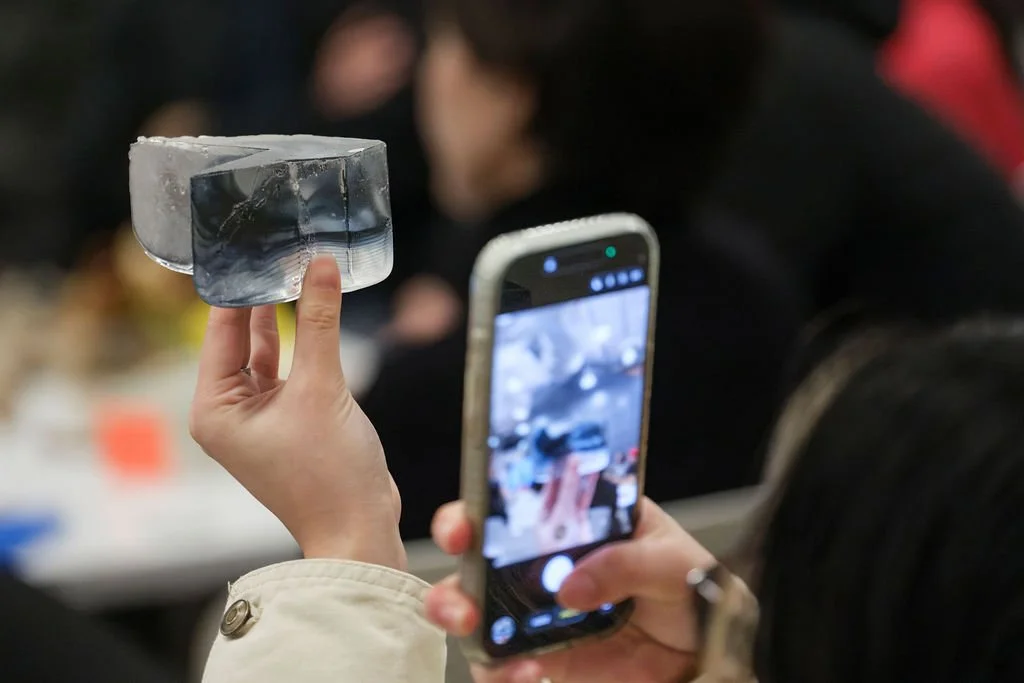
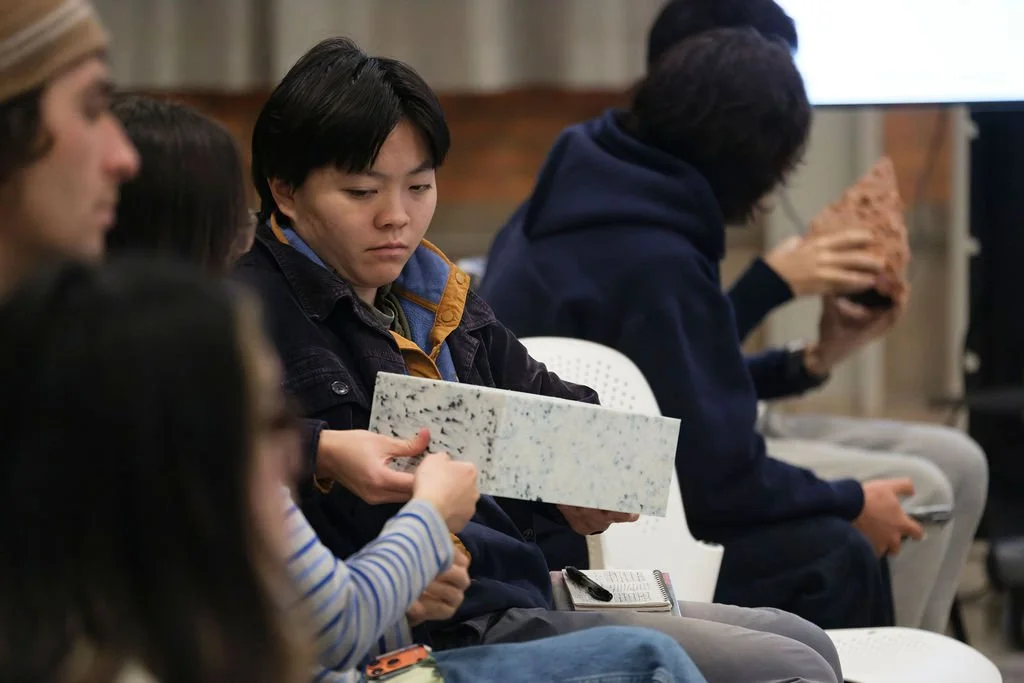
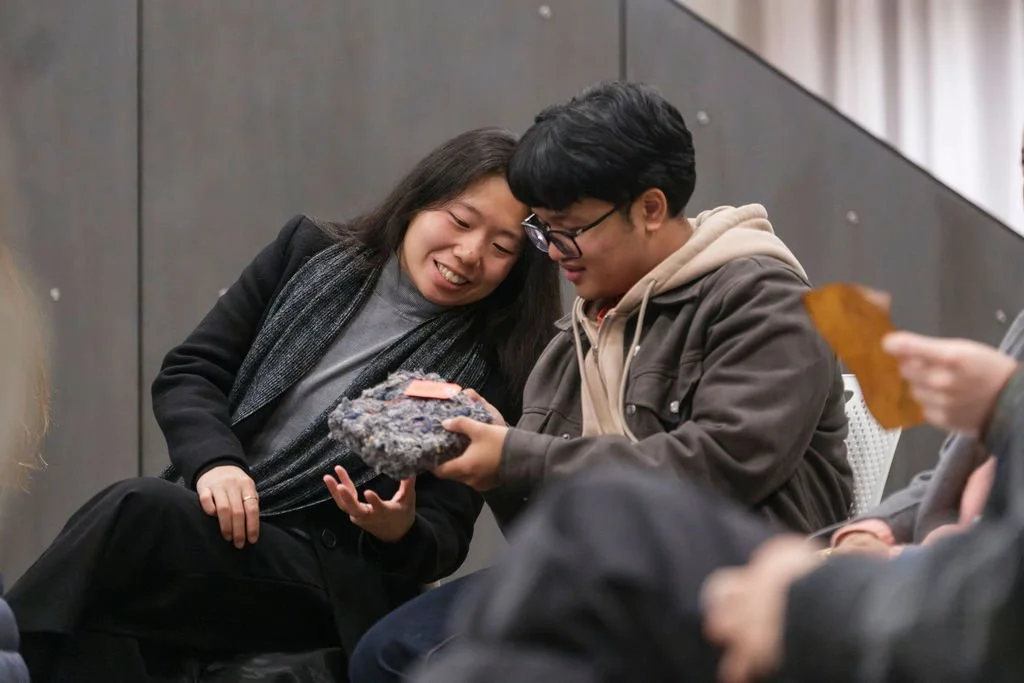
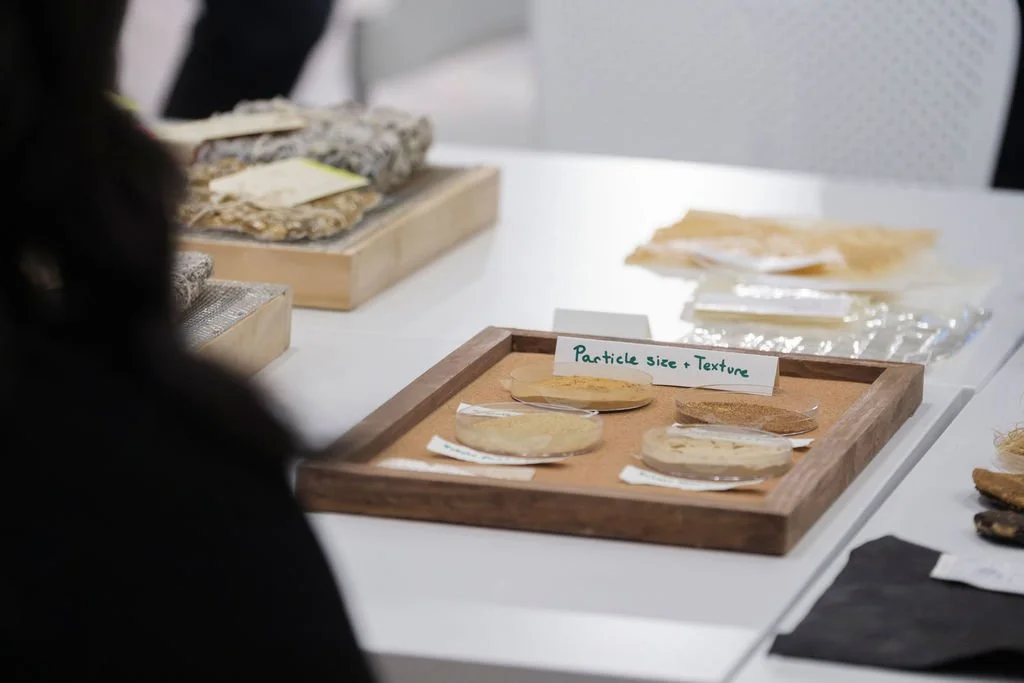
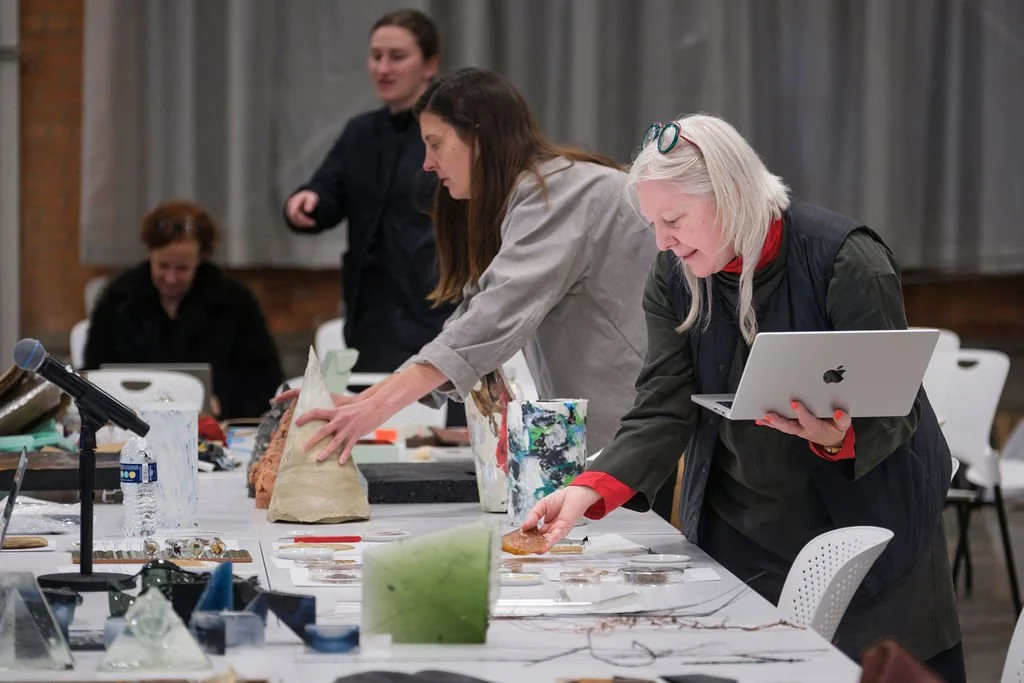
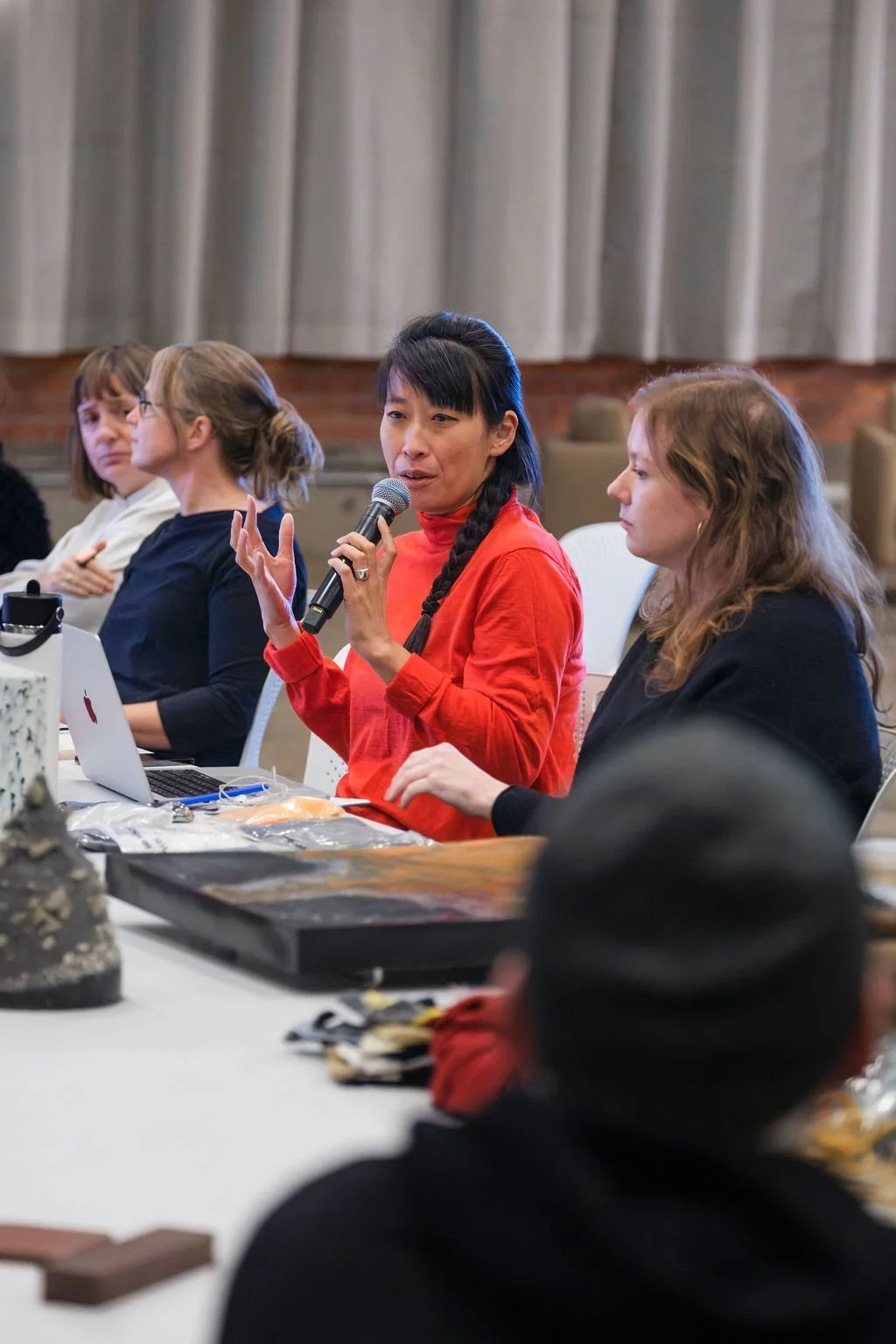
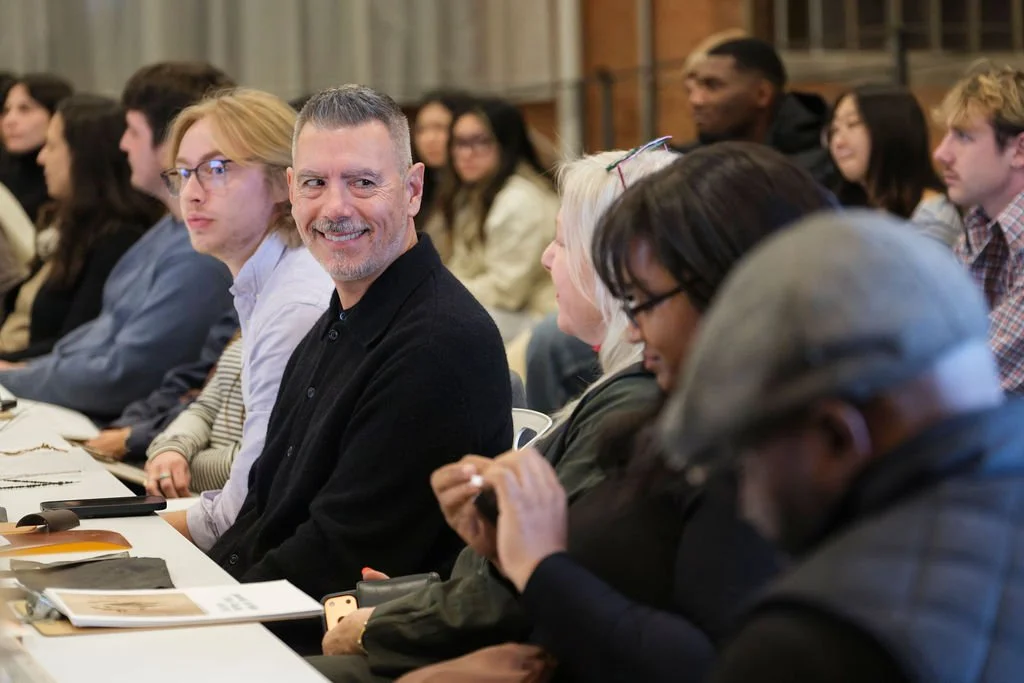
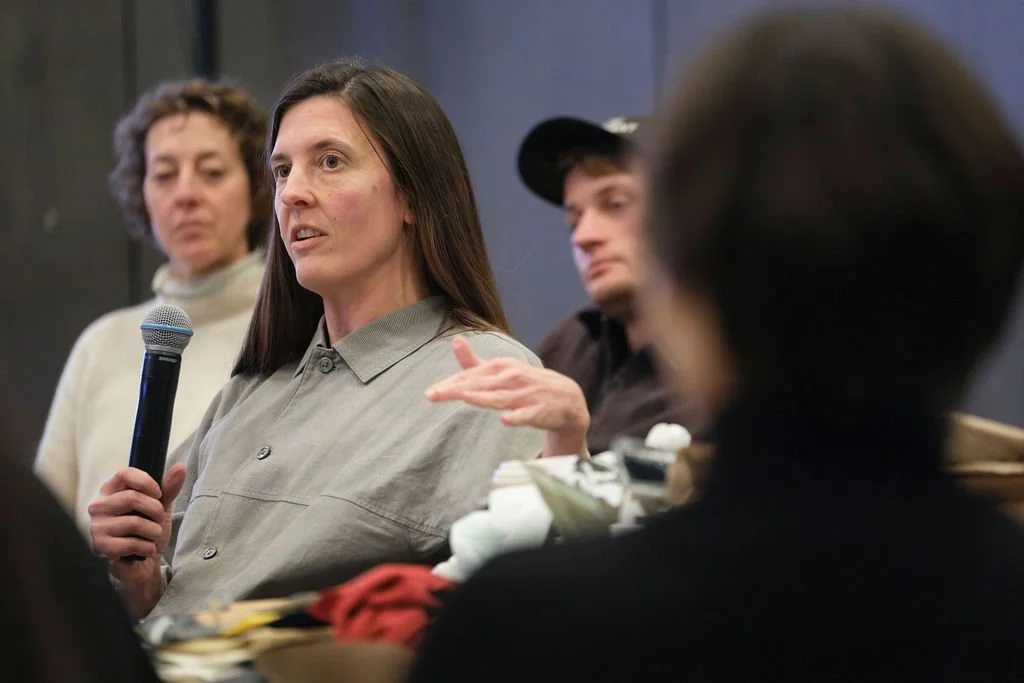
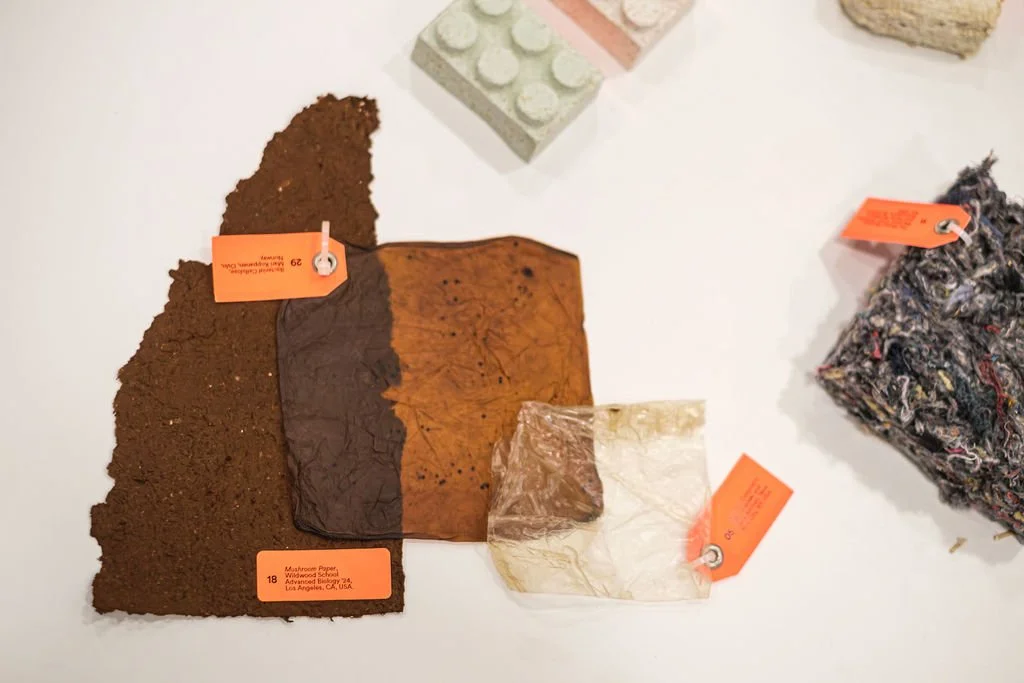
Material Feast gathers designers and practitioners around a shared table to exchange artifacts and knowledge. The materials we share are not reified objects, but the ephemera one might find in a studio or design experiment — samples, discards, process, research notes, documentation, tools, equipment, or test pieces. This gathering of materials is envisioned more as a library, less as an exhibition— as a means of sharing practices through haptic objects that will be handled by audience members, as we might share a book in a seminar classroom. Framed as a " feast"—a term that gestures toward abundance—each participant offers a brief presentation of their practice using provisional objects and materials to probe the boundaries between art, science, design, and craft, inviting us to consider materials as processes rather than products.
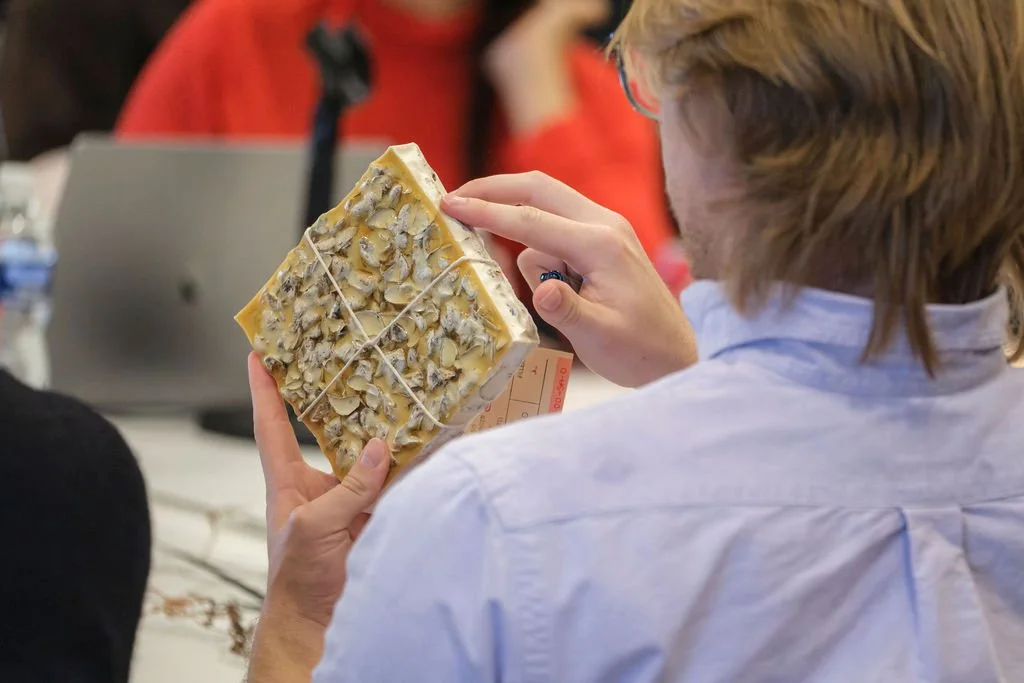
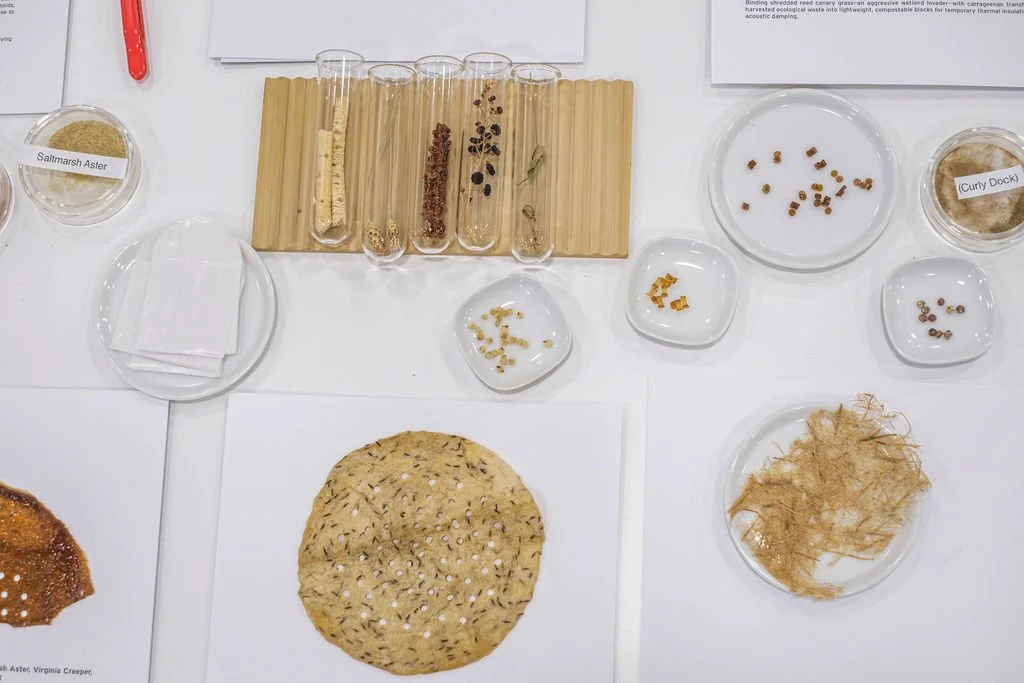
Material Feast #2 was organized as the culminating event of Inhabiting Materials, a three-day student workshop organized at the invitation of Taubman College. This edition’s sampling includes ruderal materials of perforated textiles, hydrogels, and brittle sponges made from foraged “kin” species, food waste leathers, samples drawn from automotive plastic waste streams, quagga mussels from lake systems, and experiments with light as matter through waste glass.
The format is in debted to A Banquet of Materiali Parlanti organized by Bea Leanza and Studio Ossidiana as part of Material Ecologies: Material Heritage and Rituals of Mitigation, Repair, and Reuse at the National Saudi Pavilion at the Venice Biennale, September 27–28, 2025.
Organized by:
Kate Yeh Chiu, yyyy-mm-dd, Design Faculty, School of Architecture, University of Southern California, Los Angeles
Jia Yi Gu, Co-Director, Spinagu; Assistant Professor, Humanities, Social Sciences and the Arts, Harvey Mudd College
Hilary Huckins-Weidner, PhD student, Taubman College of Architecture and Urban Planning, University of Michigan
Kin-ing Ruderals by Melanie McClintock
Derived from the Latin rudus, meaning "rubble,” ruderal plants are those that colonize disturbed, degraded, or abandoned environments such as construction sites, demolition zones, roadsides, and post-wildfire landscapes. Melanie McClintock’s Ruderal Material Project highlights the material taxonomies of ruderal flora colonizing Detroit’s historic Belle Isle’s wet-mesic flatwoods — home to some of Michigan’s most endangered plant species. Using fieldwork, cartographic snapshots, and a search for “kin-like” matter, her ruderal research asks how adaptive species can serve as models for design practices and new material applications while reframing our connection to landscapes of disturbance.
Melanie McClintock is Chair of Color & Materials Design at the College for Creative Studies, with an MFA from CCS and a BFA in Fashion Design from Virginia Commonwealth University. A CMF designer, multi-media artist, curator, and educator, she explores material-driven concepts of time, worthiness, and a sense of place. She worked in the fashion industry for over two decades in the United States, Qatar, and Indonesia.
Light Casting in Waste Glass by Catie Newell
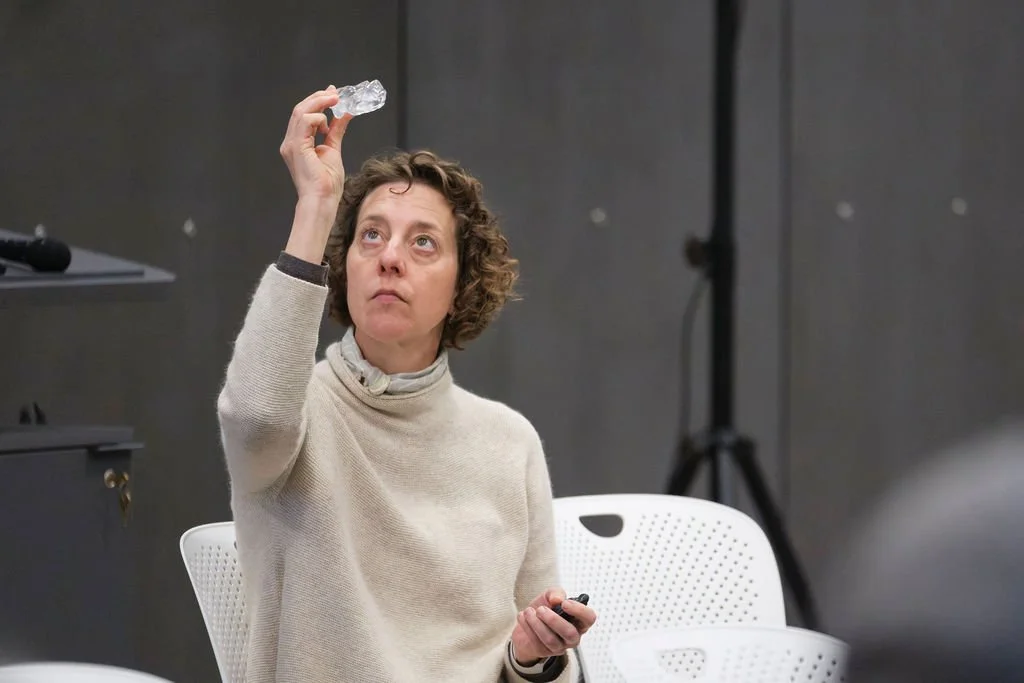
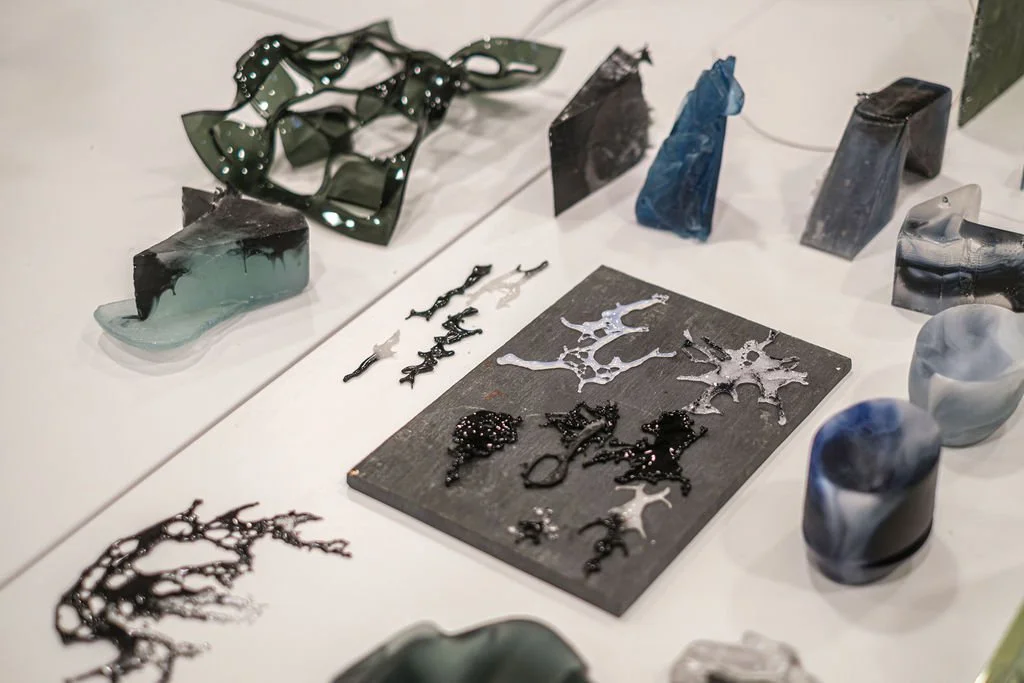
In architecture, glass is conventionally chosen for transparency and thinness. Catie Newell's work is informed by volume color, the way a single glass can appear to change hue as its thickness changes, first described by Josef Albers. Her light experiments treat glass as a thickened material, exploring how colored glass shifts with available light. Panes are cut in a zero-waste pattern and smaller cast forms are made to test how thickness changes across multiple dimensions.
Catie Newell is Professor of Architecture at the University of Michigan’s Taubman College, which she joined in 2009 as the Oberdick Fellow. She is the founding principal of Alibi Studio, established in Detroit in 2010, and her work explores materiality in relation to place through material systems, light, and darkness. She is a Lucas Fellow, a Kresge Artist Fellow, and a Fellow of the American Academy in Rome.
Food Waste Leathers by Brittanie Dabney
Every year, an estimated 745,000 tons of food waste are landfilled in Michigan, and more than 10,000 food service establishments across the state, from restaurants to school cafeterias, generate significant amounts of it, contributing to landfill methane emissions. Brittanie Dabney, an environmental scientist who studied microplastic pollution, is developing experiments for food waste leather, a sheet-like material made from discarded food by-products, such as fruit peels, pomace (the pulp left after pressing juice or wine), eggshells, coffee grounds, or vegetable scraps. Her team collects these discards from local restaurants and processes them into small-batch products, including compostable packaging and plant-based leather alternatives.
Brittanie Dabney is the founder and CEO of Ecosphere Organics, a Detroit-based company that converts food waste from local restaurants and suppliers into reusable materials. An environmental scientist trained at Wayne State University, she studied microplastic pollution, and her company now develops compostable packaging and plant-based leather alternatives at Newlab. She is adjunct faculty at the College for Creative Studies and served on the 2025 Detroit Month of Design curatorial committee.
Waste Plastic Cladding by Meredith Miller
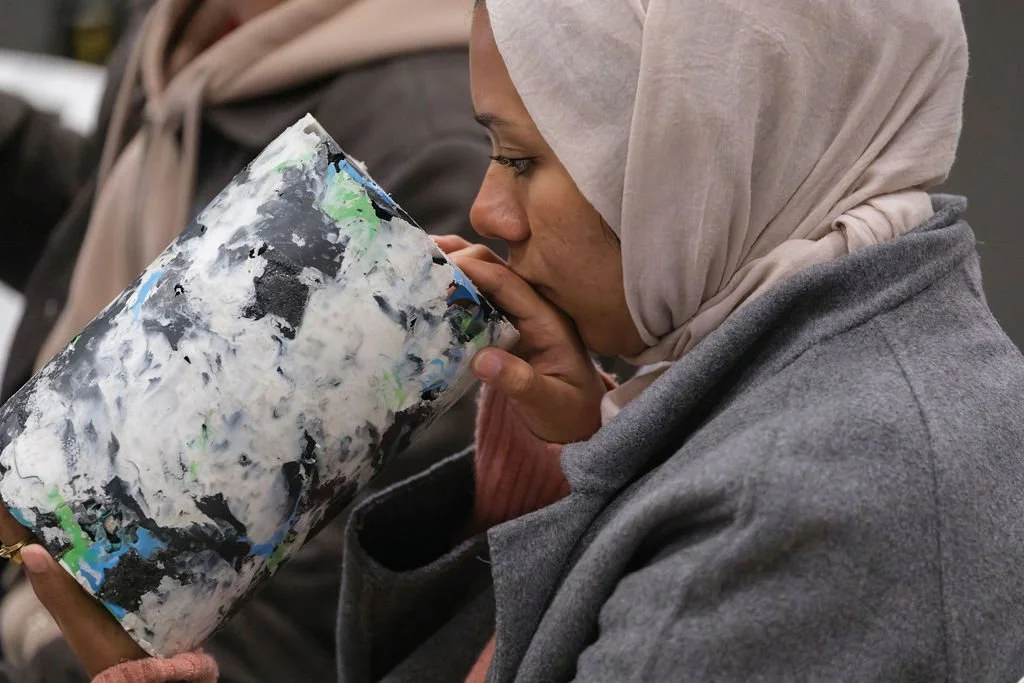
Meredith Miller’s work is informed by the discovery of plastiglomerate, a new type of rock composite that has entered the planet’s sedimentary record. Post Rock fuses plastic waste diverted from auto-manufacturing in the Detroit-region into building components. The collected plastic waste is processed in two ways: on-site, where it is stacked and thermocast, and in the lab, where it is placed in a rotating thermoforming mold that gives it shape. Noting the regional specificity of waste streams, Post Rock speculates that the specificities of different waste plastics’ “geographies” could inform or lead to differing composite materials being cast into architectural components.
Meredith Miller is Associate Professor of Architecture and Director of the Master of Architecture program at Taubman College. She holds a BS from the University of Virginia and a Master of Architecture from Princeton. With Thom Moran, she leads Post Rock, a research initiative developing a composite building product from waste plastics, and she is a founding member of the practice T+E+A+M.
Thermal Properties of Quagga Mussels by Ana Morcillo Pallarés
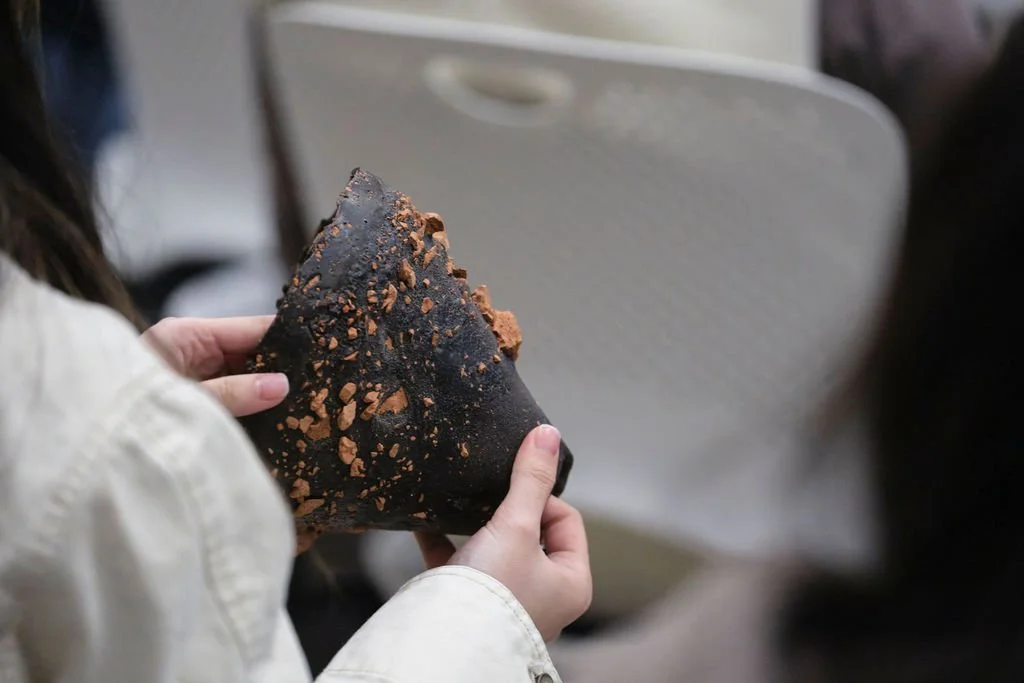
Since first appearing in the 1980s, the invasive zebra and quagga mussels in the Great Lakes have multiplied into the quadrillions. Native to Eastern Europe, they traveled west in ships’ ballast water. Since their introduction to the region, the mussels have colonized the soft, sandy lake bottom, filtering enormous volumes of water, upending the food web, and contributing to the dramatic decline of native Diporeia, a shrimp-like organism (according to this report by Invasive Mussel Collective). A niche industry has since developed to remove the thousands of cubic feet of mussel shells and deposit them into landfills. Morcillo Pallarés’s research with students utilizes this surplus as insulation by harnessing the natural thermal properties of the mussels’ calcium-rich shells to produce passive cooling products for residential architecture.
Ana Morcillo Pallarés is an architect, designer, and researcher and Associate Professor of Architecture at Taubman College, teaching architectural design, design research, and spatial politics. She holds a PhD in architecture from Taubman and is principal of Rumor Studio, formerly Morcillo Pallarés + Rule Arquitectos.