Upcoming Events
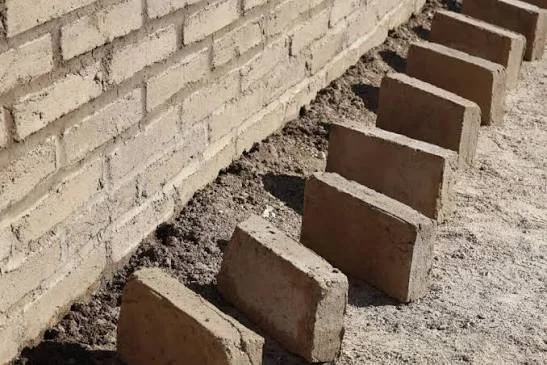
Earthen Matter
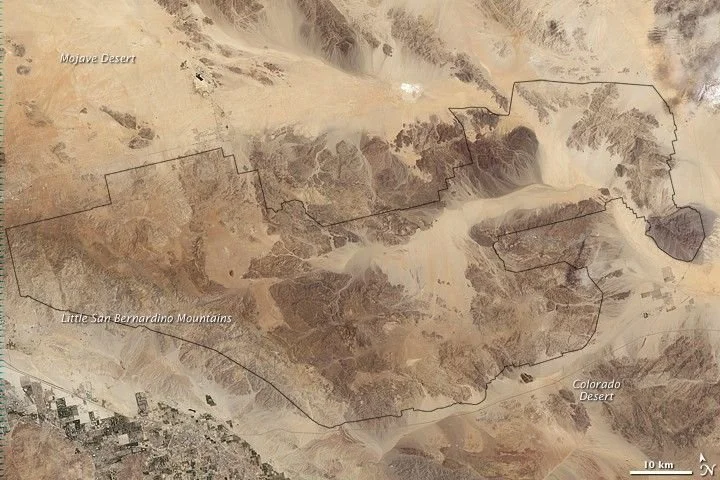
Satellite image of Little San Bernardino Mountains captured on May 28, 2003.
Earthen Matter
Organized by:
Jia Yi Gu, Assistant Professor of Architecture, Harvey Mudd College; Co-Director, Spinagu
Presented by:
Feminist Center for Creative Work as part of the community program Material Streams
Through hands-on workshops, walking tours, and discussions, this one-day workshop explores how earthen matter, material science, and modernist ideologies intersect.
The excursion begins with a two-hour hands-on adobe workshop, led by Ben Loescher of adobeisnotsoftware, an earthen education and advocacy organization. Participants will learn the foundations of clay to mix, form, and dry adobe by working directly with excavated soil to produce molded bricks. Participants will practice the ribbon and ball tests, field techniques long used by earth builders to read a soil's plasticity by touch. Unlike the laboratory instruments and classification charts of modern soil science, these tests locate knowledge in the hand. Fibrous materials such as straw contribute tensile strength while also helping to prevent cracking as bricks cure in the sun. Participants leave with an understanding of how particle size, moisture content, plasticity, and organic matter affect the behavior of earth as it is mixed, formed, compressed, and dried into adobe bricks.
The workshop is followed by a conversation between Jia Yi Gu and Ben Loescher exploring the history of adobe and regulatory systems. For much of the twentieth century, adobe sat outside the formal structures of California building code, which increasingly accommodated industrially manufactured, standardized materials whose properties could be tested and demonstrated through the methods of modern science. Because adobe’s composition varies from site to site and soil to soil, the earthen mixture often evaded modernist systems of material classification and was treated as a non-standardized building material. Without a prescriptive pathway for building, earthen building was effectively written out of use through incomplete building code, despite the fact that Indigenous people have utilized this technique for centuries in their architecture.
The day continues onto an adobe brick yard and a building-to-be. A walking tour of the adobe yard and future home of Yucca Valley Materials Lab explores an artist-founded center and a climate future of low-carbon and fire-resistant desert construction, and one of the first permitted adobe constructions in the region. Yucca Valley Material Lab envisions the adobe yard as a site where local soil is redirected as a material resource, providing an alternative to freighted supply chains of construction and shortening the distance between sites of geologic extraction and sites of temporary human use.
Land
Acknowledgement
The Mojave deserts of the Joshua Tree region are the homelands of the Serrano, Cahuilla, and Chemehuevi peoples. Their relationships with this land, its water sources, plants, and geologic cycles, long predate the arrival of contemporary adobe building tradition.
adobeisnotsoftware
Adobeisnotsoftware was founded in 2009 to inform, enable and advance adobe construction in California. They are the earthen education and advocacy arm of Terrain - a California-based architecture firm that specializes in earthen construction, adaptive reuse, high-performance workplace, and technical environments. We believe in the extraordinary potential of ordinary things.
Yucca Valley
Material Lab
Yucca Valley Material Lab (YVML) champions a decentralized, inclusive, and affordable model for art education grounded in direct material exploration. Located in the rural high desert community of the Morongo Basin, YVML offers a diverse range of core programs and services, including artist and musician residencies, workshops and public events.
Support
The day trip is organized with Harvey Mudd College’s Bioregional Design Research course, with six workshop spots available for the Feminist Center community as part of the community program Material Streams. The workshop and field trip is made possible with support from the the Harvey Mudd College Hixon Center for Climate and the Environment.
Inhabiting Materials
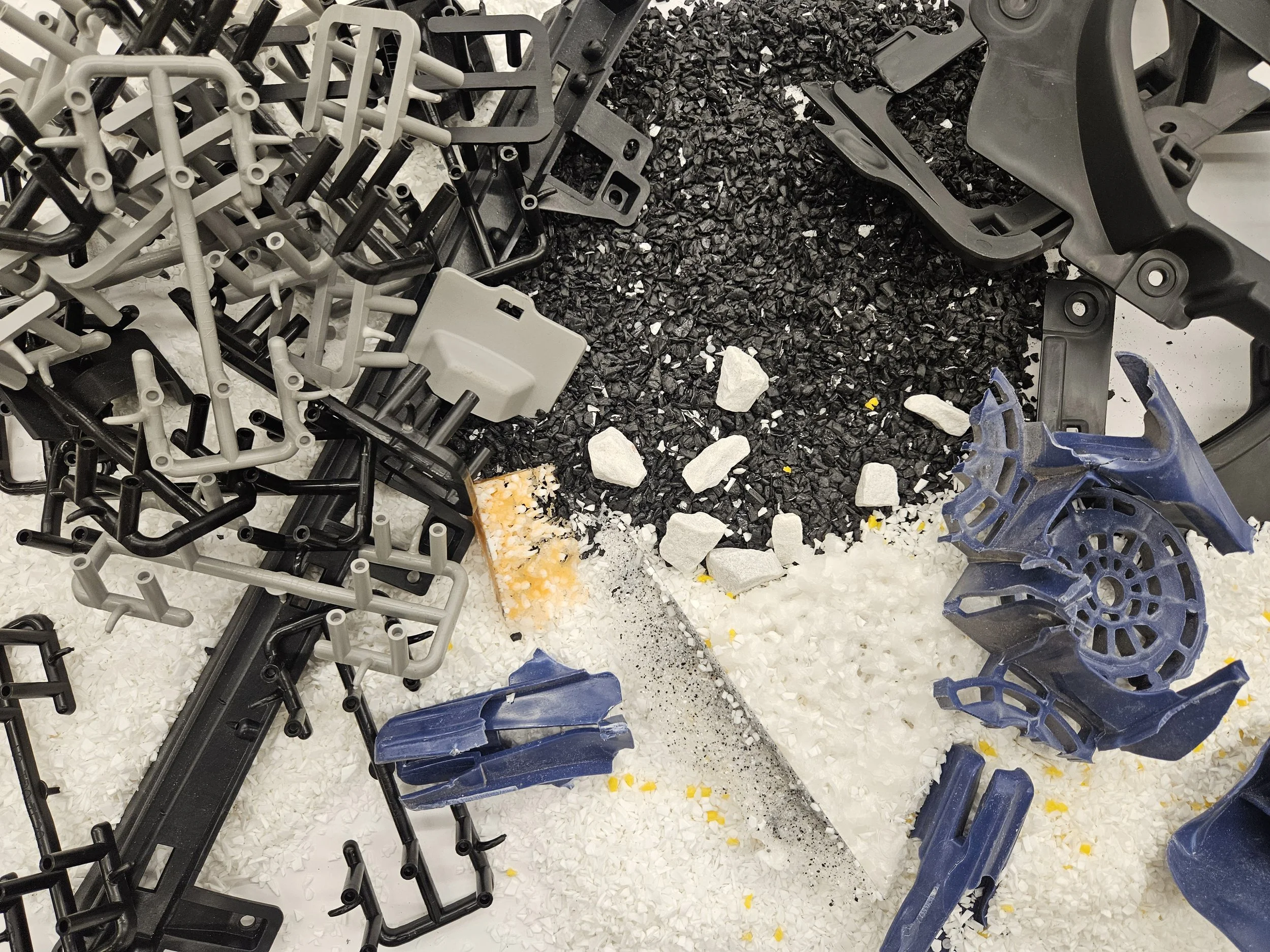
Photograph of plastics debris from Post Rock research. Courtesy of Post Rock.
Inhabiting Materials
Inhabiting Materials is a three-day student workshop organized at the invitation of the Taubman College of Architecture and Urban Planning at the University of Michigan. The workshop gathers theoretical and practical explorations of material as cultural technique while attending to the logistical, economic, ecological, and technological actions that transform matter into the material substrate for our lives. Through site-based lectures, parasitic readings, annotative drawing, and the accumulation of a portable material library, students will inhabit the regional material landscape and its practitioners. The program moves between archives, xylariums, salvage sites, architectural details, and how-to guides to intensify our understanding of materials as processes.
Students from the University of Michigan are invited to apply to participate in the workshops taking place November 14—November 15, 2026, in the Taubman College Liberty Annex.
Curriculum
Organized by:
Kate Yeh Chiu, Design Faculty, School of Architecture, University of Southern California, Los Angeles
Jia Yi Gu, Assistant Professor, Humanities, Social Sciences and the Arts, Harvey Mudd College
Hilary Huckins Weidner, PhD student, Taubman College of Architecture and Urban Planning, University of Michigan
Verbing with Materials
A presentation by Kate Yeh Chiu, Jia Yi Gu and Hilary Huckins Weidner on the 2024 Getty PST ART initiative Material Acts: Experimentation in Architecture and Design, presented by Craft Contemporary. The exhibition and publication is organized around five material acts, Animating, Disassembling, Feeding, Re-fusing, and Stitching. Each of these terms operates as thematic clusters illustrating key events in a material’s production, from the fusion of sedimentary grain such as sand with plastics, to the intentional dismantling of a stone column by the pulling of a single piece of string. If we frame “materials” as a verb rather than a fixed object, as “authored” objects rather than discovered conditions, could we differently explore the fullness of matter undergoing transformation as it sheds one state of arrangement in order to adopt another.
See Kate Yeh Chiu, and Jia Yi Gu, eds. Material Acts: Experimentation in Architecture and Design. Los Angeles: Craft Contemporary, 2024
Place-Based
Lectures
Research presentations by Jia Yi Gu, Andrew Herscher, Phoebe Springstubb, and Dana Salama. Place-based lectures takes place within, or directly alongside, the landscape, collection, building, or material context being discussed, treating the site itself as part of the subject and as a source of knowledge. Rather than separating scholarship from its physical context, these lectures use location to make material histories tangible and encourage audiences to encounter ideas through the places where they are materially produced.
For example, see the site-specific experimental lecture series Place Setting (which inspired Place Based Lectures) in Los Angeles.
Deconstructing a
House: Annotative
Drawing Workshop
Charlotte Malterre-Barthes’s re-drawn diagram of the deconstructed 2-4-6-8 House traces the provenance (or sources) of materials by accounting for their basic elements: aluminum, silica, copper, crude oil etc. This work politicizes the seemingly neutral information presented in architectural drawings by tracing them back to sites of extraction and industry. Working in groups of 4, students further annotate the drawing with their own layer of information (labor, degradation, petrol lines, repair), researched together. These annotations will form a basis of understanding how domestic architecture is not only through the parts of assembly but the flows of energy, labor, resources, and time that account for architecture.
See Charlotte Malterre-Barthes, “The Devil Is in the Details: Who Is It That the Earth Belongs To?,” in Non-Extractive Architecture: On Designing Without Depletion, ed. Space Caviar (Berlin: Sternberg Press, 2021)
Parasitic Reading
in Detail
Inspired by the Parasitic Reading Room, this event activates Taubman College of Architecture and Urban Design as a text itself, inviting participants to read and discuss material systems together. The program produces a spontaneous set of reading spaces in which select texts are read aloud in relation to a specific set of material assemblies found on site.
For example, see the Parasitic Reading Room—a nomad, spontaneous and parasitic set of reading spaces took place along the venues of the 4th Istanbul Design Biennial ‘A School of Schools’ and other spots in the city. Learn more.
Material Feast
Mon. Nov. 16
6:30pm
Taubman College
Liberty Annex
Material Feast is an interdisciplinary dialogue featuring designers and practitioners interrogating the contemporary role of materials in design. Framed as a "material feast"—a term that gestures toward abundance—each participant will offer a brief presentation of their practice using provisional objects and materials to probe the boundaries between art, science, design, and craft, inviting us to consider materials as processes rather than products.
Material Acts: A Symposium
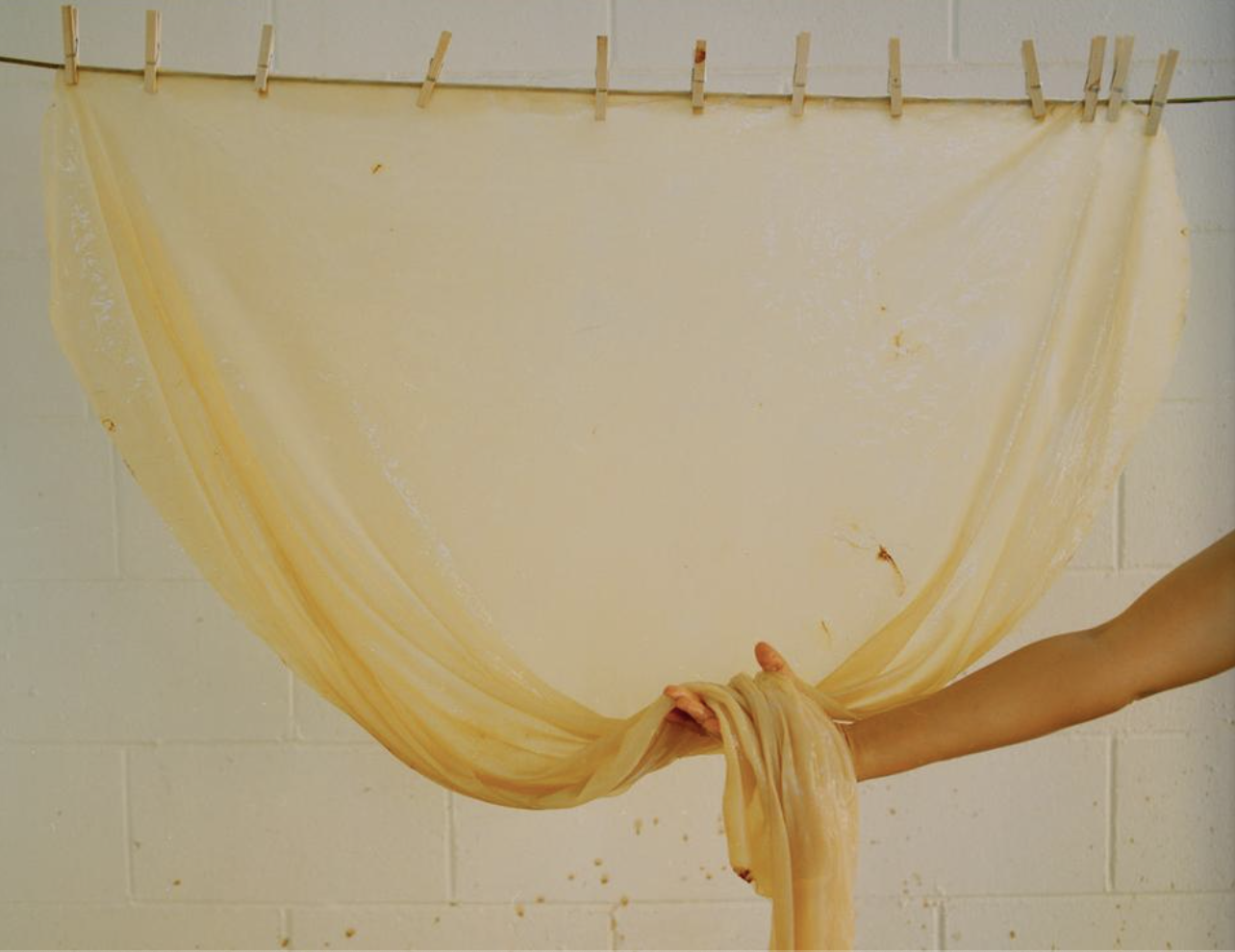
Understanding materials as process-based events with human actors, rather than artifacts found in stasis, this symposium on new materials explores the rich milieu of ideas that accompany their making.